
Ramps are one of the most critical elements of accessibility. Under the Americans with Disabilities Act (ADA), ramps ensure that people using wheelchairs, mobility aids, or with limited strength can safely navigate changes in level without relying on stairs.
ADA ramp requirements are precise because even small errors in slope, width, or layout can make a ramp unsafe or unusable. Many compliance failures occur not because a ramp is missing, but because it was built without fully understanding how ADA standards work together.
This guide explains ADA ramp requirements in detail, including when ramps are required, how they must be designed, common compliance mistakes, and how ada inspections identify issues before they lead to costly corrections.
What Are ADA Ramp Requirements?
ADA ramp requirements define how ramps must be designed and constructed to provide a safe, accessible route where changes in level occur. These requirements apply to both new construction and altered spaces where accessibility upgrades are required.
A compliant ramp must:
- Allow safe, independent use
- Maintain consistent slope and width
- Include appropriate handrails and landings
- Connect smoothly to accessible routes
Ramps are not simply sloped surfaces. They are regulated accessibility features that must function as part of a continuous accessible path.
When Is a Ramp Required Under ADA?
A ramp is required whenever a change in level prevents access for people who cannot use stairs. This commonly includes:
- Building entrances
- Interior level changes
- Transitions between rooms or spaces
- Access routes to restrooms and facilities
Temporary ramps may also be required in some situations, but permanent ramps must meet full ADA standards. Failure to install a ramp where required can invalidate the entire accessible route.
ADA Ramp Slope and Rise Rules
Slope is one of the most critical aspects of ADA ramp compliance. Ramps that are too steep are dangerous and unusable for many people.
ADA sets strict limits on:
- Maximum slope
- Maximum rise per run
- Total ramp length
Even small deviations from acceptable slope can cause a ramp to fail inspection. Excessive slope increases the risk of loss of control, fatigue, and falls, especially for wheelchair users and those with limited upper body strength.
Slope errors are among the most frequently cited ADA violations.
ADA Ramp Width and Clear Space Requirements
Ramps must provide sufficient clear width to allow safe passage without obstruction. The required clear width applies between handrails and along the full length of the ramp.
Ramp width must also be evaluated in relation to surrounding elements. For example, at entrances, ramp width must align with ADA door clearances, as insufficient space near doors can block access even if the ramp itself meets slope requirements.
Clear space issues often arise when:
- Handrails are mounted too close together
- Walls or barriers encroach on the ramp
- Door swings reduce usable width
ADA Handrails and Edge Protection on Ramps
Handrails are required on most ramps where the rise exceeds minimum thresholds. Their purpose is to provide stability, control, and guidance for users navigating the ramp.
Ramp handrails must:
- Be installed on both sides where required
- Remain continuous along the ramp
- Include proper extensions at the top and bottom
Edge protection is also required to prevent wheels or feet from slipping off the ramp surface. Missing or inadequate edge protection is a common inspection finding.
Ramp Landings, Turns, and Level Areas
Landings provide users with safe, level areas to rest, turn, or transition between surfaces. ADA requires landings at:
- The top and bottom of ramps
- Changes in direction
- Doors opening onto ramps
Landings must be large enough to accommodate manoeuvring and resting. At turning points, ADA knee clearance considerations affect how users position themselves, especially when stopping or changing direction.
Insufficient landing space is a frequent compliance issue, particularly in retrofitted buildings.
Common ADA Ramp Compliance Mistakes
Many ramp failures are avoidable and occur due to design assumptions rather than intentional non-compliance.
Common mistakes include:
- Slopes that exceed allowable limits
- Missing or incomplete handrails
- Narrow landings
- Poor transitions between surfaces
- Ramps that terminate into restricted spaces
Ramp issues frequently appear near restrooms, where ADA bathroom requirements must align with exterior and interior accessible routes. When these elements are designed separately, compliance gaps often appear at the connection points.
What Inspectors Check During an ADA Ramp Inspection
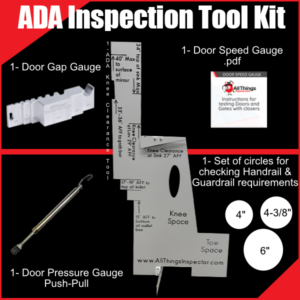
ADA ramp inspections assess whether the ramp functions safely as part of an accessible route. Inspectors do not rely on visual checks alone.
During an inspection, the following are typically reviewed:
- Ramp slope and rise
- Clear width and obstructions
- Handrail placement and continuity
- Landing dimensions
- Transitions and surface conditions
Many ramp deficiencies are documented using the same structured process outlined in what to check during an ADA inspection for a bathroom, particularly where ramps connect directly to restroom access points.
Inspection reports provide clear documentation of non-compliant elements, helping property owners prioritise corrections.
Why ADA Ramp Compliance Matters for Property Owners
Ramps are high-risk accessibility elements. Non-compliant ramps can:
- Prevent independent access
- Increase fall risk
- Expose property owners to legal action
- Require expensive retrofits
Addressing ramp compliance early, especially during planning or renovation stages, is significantly more cost-effective than correcting violations later.
Final Thoughts on ADA Ramp Requirements
ADA ramp requirements exist to protect users and ensure equitable access. A ramp that appears functional may still fail compliance if slope, width, or layout standards are not met.
Understanding how ramp requirements interact with doors, bathrooms, and inspection processes is essential. Professional inspections help identify issues early and ensure accessible routes remain safe, usable, and compliant.
Frequently Asked Questions
What are ADA ramp requirements?
ADA ramp requirements set rules for slope, width, handrails, landings, and layout to ensure ramps provide safe and accessible routes for people with mobility limitations.
When is a ramp required under ADA?
A ramp is required whenever a change in level blocks access for people who cannot use stairs, including entrances, interior transitions, and routes to facilities.
What is the most common ADA ramp violation?
The most common violation is excessive slope, which makes ramps unsafe and difficult to use, often combined with missing handrails or inadequate landings.
Do ADA ramps need handrails on both sides?
Handrails are required on most ramps where the rise exceeds minimum limits, and they must be continuous, properly mounted, and extend at both ends.
How do inspections check ADA ramp compliance?
Inspections verify ramp slope, width, handrails, landings, and transitions, documenting any deficiencies that affect accessibility and safety.