
Doors are one of the most common accessibility barriers in buildings. Even when ramps, corridors, and bathrooms meet accessibility standards, a non-compliant door can break the entire accessible route.
ADA compliant doors are designed to allow people with disabilities to enter, exit, and move through spaces safely and independently. This includes wheelchair users, people with limited strength or dexterity, and individuals using mobility aids.
Many compliance failures occur not because doors are missing, but because door clearances, hardware, or opening force were overlooked during design or installation. This guide explains what makes a door ADA compliant, where requirements apply, common mistakes, and how inspections identify issues before they become costly problems.
What Are ADA Compliant Doors?
ADA compliant doors are doors that meet accessibility standards set under the Americans with Disabilities Act. These standards ensure doors can be approached, opened, and passed through without excessive force or complex movement.
A compliant door must:
- Provide adequate clear opening space
- Allow safe manoeuvring on both sides
- Use accessible hardware
- Require minimal force to operate
Doors are evaluated as part of a wider accessible route. If a door fails, the entire route may be considered non-compliant.
Where ADA Door Compliance Applies
ADA door requirements apply to many areas within a building, especially those open to the public.
These include:
- Main entrances and exits
- Interior doors along accessible routes
- Doors leading to restrooms, facilities, and common areas
Door compliance is especially critical in restrooms, where ADA bathroom requirements depend on proper door clearance, swing direction, and hardware access. A single door failure can prevent access to otherwise compliant bathroom fixtures.
ADA Door Clearance Requirements
Clearance is one of the most important elements of ADA door compliance. Doors must provide enough clear width and manoeuvring space for users to approach, open, and move through safely.
Clearance rules address:
- Clear opening width
- Space on the push and pull sides
- Relationship between door swing and adjacent walls or fixtures
These measurements are defined under ADA door clearances, which determine whether users can approach, open, and pass through doors safely without obstruction.
Door clearance issues often arise when:
- Doors swing into required manoeuvring space
- Hardware placement interferes with clearance
- Fixtures or walls reduce usable area
Door Hardware Requirements for ADA Compliance
Door hardware must be easy to use without tight grasping, pinching, or twisting of the wrist. This requirement is especially important for people with limited hand strength or dexterity.
Compliant hardware typically includes:
- Lever handles
- Push-type mechanisms
- Accessible pulls or bars
Round knobs and complex locking mechanisms are common causes of non-compliance. Even when clearance requirements are met, inaccessible hardware can cause a door to fail inspection.
Hardware height and placement also matter. If controls are mounted too high or too low, they may not be usable by all users.
Opening Force and Door Pressure Limits
Excessive opening force is one of the most frequently overlooked ADA violations. A door may appear functional but still require more force than allowed under accessibility standards.
Opening force matters because:
- Many users cannot apply high force consistently
- Heavy doors increase fatigue and fall risk
- Excessive pressure prevents independent use
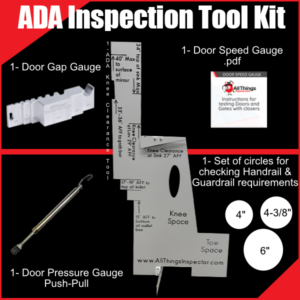
Inspectors often rely on a door pressure gauge to confirm whether opening force meets ADA limits. These tools provide objective measurements rather than relying on subjective judgement.
Opening force issues are especially common in:
- Fire-rated doors
- Exterior doors exposed to wind pressure
- Doors with poorly adjusted closers
Common ADA Door Compliance Mistakes
Door-related violations are among the most common findings during ADA inspections.
Typical mistakes include:
- Insufficient clear opening width
- Missing or reduced manoeuvring space
- Inaccessible hardware
- Doors requiring excessive force
- Improper door swing direction
These issues often occur together. For example, a heavy door with limited clearance and poor hardware may block access entirely.
ADA Compliant Doors in Bathrooms and Wet Areas
Bathrooms present unique challenges for door compliance due to tight spaces, fixtures, and moisture considerations.
Common bathroom door issues include:
- Doors swinging into required clear floor space
- Hardware placed too close to walls or fixtures
- Insufficient clearance near sinks and toilets
Poor door placement can interfere with ADA knee clearance, limiting safe access to sinks and counters. Even small placement errors can make fixtures unusable for wheelchair users.
What Inspectors Check for ADA Door Compliance
ADA inspections assess doors as part of a complete accessibility review. Inspectors do not evaluate doors in isolation.
During an inspection, doors are typically checked for:
- Clear opening width
- Manoeuvring space on both sides
- Hardware usability
- Opening force
- Interference with fixtures or routes
Many door-related failures are recorded using the same framework outlined in what to check during an ADA inspection for a bathroom, particularly where doors affect restroom access.
Inspection reports clearly document deficiencies and prioritise corrective actions.
Why ADA Compliant Doors Matter for Property Owners
Non-compliant doors create significant risk for property owners and operators.
Failure to meet door requirements can:
- Block accessible routes
- Increase fall and injury risk
- Trigger complaints or legal action
- Require expensive retrofits
Door issues are often inexpensive to correct when identified early but costly when ignored. Inspections help identify these problems before they escalate.
Final Thoughts on ADA Compliant Doors
Doors are one of the most critical and frequently overlooked elements of ADA compliance. Even well-designed buildings can fail accessibility standards if doors are not properly evaluated.
Understanding clearance, hardware, and opening force requirements—and verifying them through inspection—helps ensure safe, independent access for all users.
Frequently Asked Questions
What makes a door ADA compliant?
A door is ADA compliant when it provides adequate clearance, accessible hardware, low opening force, and sufficient manoeuvring space for safe, independent use.
Where do ADA door requirements apply?
ADA door requirements apply to entrances, interior doors along accessible routes, and doors leading to restrooms and common public areas.
What is the most common ADA door violation?
The most common violation is insufficient clearance or excessive opening force, which prevents users from opening or passing through doors independently.
Do ADA compliant doors require special hardware?
Yes. ADA compliant doors require hardware that can be operated without tight grasping or twisting, such as lever handles or push-type devices.
How do inspectors check ADA door compliance?
Inspectors measure clearance, manoeuvring space, hardware usability, and opening force, documenting any issues that affect accessibility and safety.